Being FOMO: What Our Pets Teach Us About Belonging

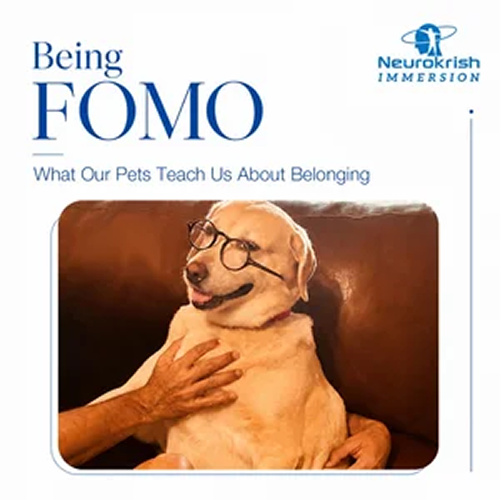
What do our pets teach us about belonging?
In this episode, we reflect on the quiet wisdom that animals bring into human life through the story of Sakura. Pets do not speak our language, yet they often understand presence, affection, trust and attachment in ways that feel deeply human.

Through the lens of the brain, emotion and lived experience, this conversation explores how companionship shapes our sense of safety, how care becomes a language of connection, and how the bonds we share with animals can remind us what it means to belong.

A gentle reflection on love, loyalty, memory and the invisible threads that make a house feel like home.

Listen now to discover what Sakura, and the pets who walk beside us, can teach us about belonging.

Implementing Innovations in Alzheimer’s Diagnostic Testing and Treatment

Alzheimer’s care is entering a new era — one where diagnosis is no longer limited to late-stage symptoms, and where early detection may open the door to better planning, timely referrals, and emerging treatment possibilities.

In this episode, we explore the changing landscape of Alzheimer’s diagnostic testing and treatment, with a focus on blood-based biomarkers, cognitive assessments, primary care workflows, specialist referrals, and the evolving role of brain health navigator models.

The conversation looks at how family physicians and neurologists can work together to identify cognitive changes earlier, evaluate addressable causes, and guide patients through shared decision-making with greater clarity and confidence.

A thoughtful discussion on memory, medicine, innovation and the future of Alzheimer’s care.

Stress, Survival & The Human Brain

Stress is often seen as a problem to be removed. But before it became a diagnosis, a hormone level, or a modern buzzword, stress was survival.

In this episode, we explore how the human brain inherited ancient systems built to detect threat, mobilise energy and keep us alive. From fight, flight and freeze to the modern pressures of notifications, interrupted rest and invisible uncertainty, we look at how survival responses can become chronic patterns in everyday life.

A reflective journey into the nervous system, the brain-body conversation and the quiet question at the centre of stress: Am I safe?

Listen now to understand stress not as the enemy, but as an ancient survival language the brain is still learning to rewrite.

Godfathers of Disruption

Why does history summon godfathers in times of disruption?

In this episode, we explore the powerful intersection of history, politics, leadership and the human brain. From uncertainty and fear to authority and collective behaviour, this conversation looks at why societies often turn towards dominant figures when the world feels unstable.

A reflective journey into the neuroscience of disruption, the psychology of power and the mind’s search for order in a VUCA world.

Listen now and understand how history, leadership and the brain shape one another.

The Samurai Mind

What happens to the warrior when the battlefield vanishes? In this insightful episode of Neurokrish Immersion, we step beyond the romanticized legends of swords and castles to explore a profound psychological and cultural evolution. Inspired by historical events and grounded in modern neuroscience, this episode charts how medieval Japan transformed centuries of raw warrior energy into an enduring legacy of mindfulness, grace, and master craftsmanship.

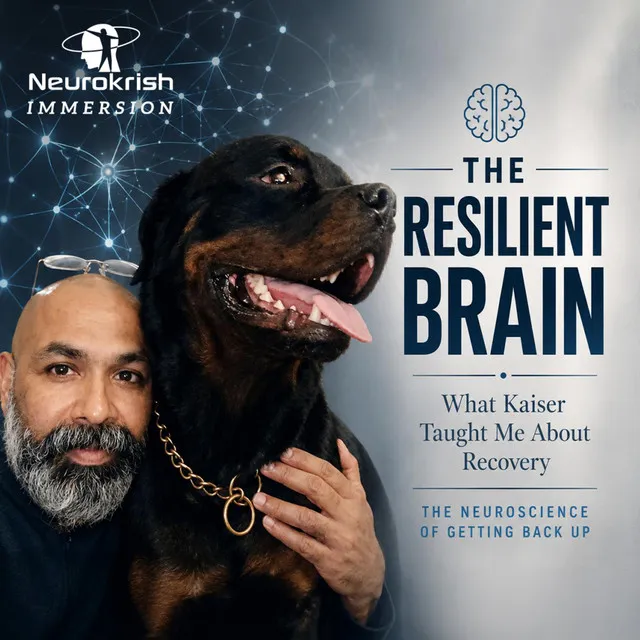
The Resilient Brain

What does it really take to get back up after life knocks you down?

In this heartfelt episode, we explore the neuroscience of resilience, recovery, and emotional strength through a deeply personal story inspired by Kaiser, the Rottweiler. From understanding how the brain responds to pain, stress, and setbacks to discovering how healing begins with patience, trust, and small steps forward, this podcast reflects on what recovery truly means.

The Resilient Brain is a reminder that strength is not about never falling. It is about learning how to rise again, with courage, compassion, and hope.

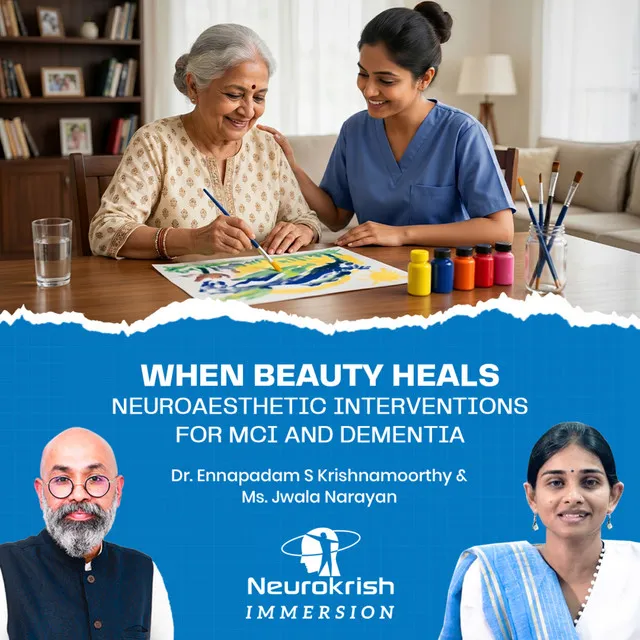
When Beauty Heals – Neuroaesthetic Interventions for MCI and Dementia

Your 40s and 50s are not just years to manage. They are years to understand your brain better.
In this podcast episode, Dr. Jwala Narayan shares valuable insights on how brain health changes with age and why memory, focus, sleep, stress, hormones, and social connection deserve more attention than we usually give them.

From everyday lifestyle choices to early signs we should not ignore, this conversation is a reminder that caring for the brain is not a later-life concern. It starts much earlier, with small, consistent habits.

Listen to the full episode and take the first step towards a healthier, sharper mind.

The Gut, Brain & Mind Loop

In this episode of Buddhi Insight, part of the Neuro Krishnamurti series, we explore the powerful connection between the gut, brain, emotions, and the autonomic nervous system. Through the story of a patient struggling with unexplained hunger, fatigue, gut urgency, weight gain, and poor sleep, the episode reveals how stress is not merely “in the mind,” but a whole-body physiological experience.
The discussion explains how emotions activate the autonomic nervous system, influencing digestion, heart rate, breathing, energy, sleep, and even long-term symptoms such as irritable bowel, fibromyalgia-like pain, panic, and long COVID-related dysregulation. It also introduces key ideas such as sympathetic overdrive, parasympathetic restoration, dysautonomia, POTS, orthostatic hypotension, and the role of perceived control in healing.

Moving beyond isolated treatment of the gut, mood, or body, this episode emphasizes whole-person care: regulating the nervous system, restoring resilience, and reconnecting mind, brain, and body as one integrated conversation.

Neurokrish Immersion: The Future of Integrative Medicine in India | Dr. Krish & Prof. B.N. Gangadhar

Why is Integrative Medicine witnessing a global resurgence at this particular moment in history?In this thought-provoking episode of Neurokrish Immersion, Dr. E.S. Krishnamoorthy sits down with Prof. B.N. Gangadhar, one of India’s most respected psychiatrists, former Director of NIMHANS, former President of the Medical Council of India, and a leading voice in the integration of traditional and modern healthcare systems.Prof. Gangadhar has been at the forefront of advancing evidence-based integrative approaches in mental health and is also a co-author of the landmark proposal exploring a dual MBBS-BAMS medical education pathway.Together, they explore:🧠 Why integrative medicine is re-emerging globally🧠 The limitations of purely reductionist models of healthcare🧠 The growing demand for personalized and holistic care🧠 How neuroscience is validating ancient healing practices🧠 The future of mental health, medicine, and medical education in India🧠 Bridging Ayurveda, Yoga, neuroscience, and modern clinical medicineAs healthcare systems worldwide grapple with chronic disease, mental health challenges, and rising healthcare costs, could integrative medicine offer a more complete framework for healing?Watch this fascinating conversation between two pioneers shaping the future of medicine in India.#IntegrativeMedicine #NeurokrishImmersion #DrKrish #BNGangadhar #MentalHealth #Neuroscience #Ayurveda #YogaTherapy #NIMHANS #HealthcareInnovation #HolisticHealth #FutureOfMedicine #MedicalEducation #BrainHealth #IndianHealthcare

Buddhi Insights : Beyond Drugs and Devices

In Episode 2 of Buddhi Insight, Dr. Krish reflects on a thought-provoking debate at the Indian Federation of Neuro Rehabilitation Annual Congress in Mumbai with Professor Michael Clarke, one of the world’s leading experts in Neurological Music Therapy.

The discussion explored a question that sits at the heart of modern rehabilitation: Should we only value interventions that have extensive research backing, or should we also recognise therapies whose benefits emerge from clinical practice, patient outcomes, and the brain’s remarkable ability to adapt?

Drawing from clinical neuroscience, real-world patient recovery, and decades of neurorehabilitation experience, this episode challenges conventional thinking and explores how recovery after stroke, Parkinson’s disease, traumatic brain injury, and long COVID is often shaped by the dynamic relationship between the brain, the intervention, and the individual.